Leading a Global R&D Team to Power Seamless CAD Translation at Scale
- Background & Role
- Leading a Global Team
- The 3D InterOp Mission
- Technical Challenges & Innovation
- Spatial's Product Portfolio
- Working at Spatial
- About Spatial
Background & Role
-
Can you introduce yourself and describe your role as Software Engineering Director for Spatial Interoperability?
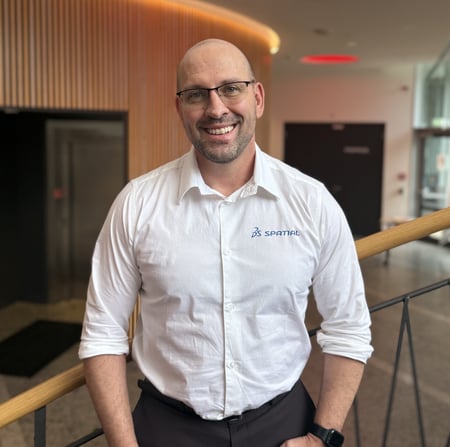
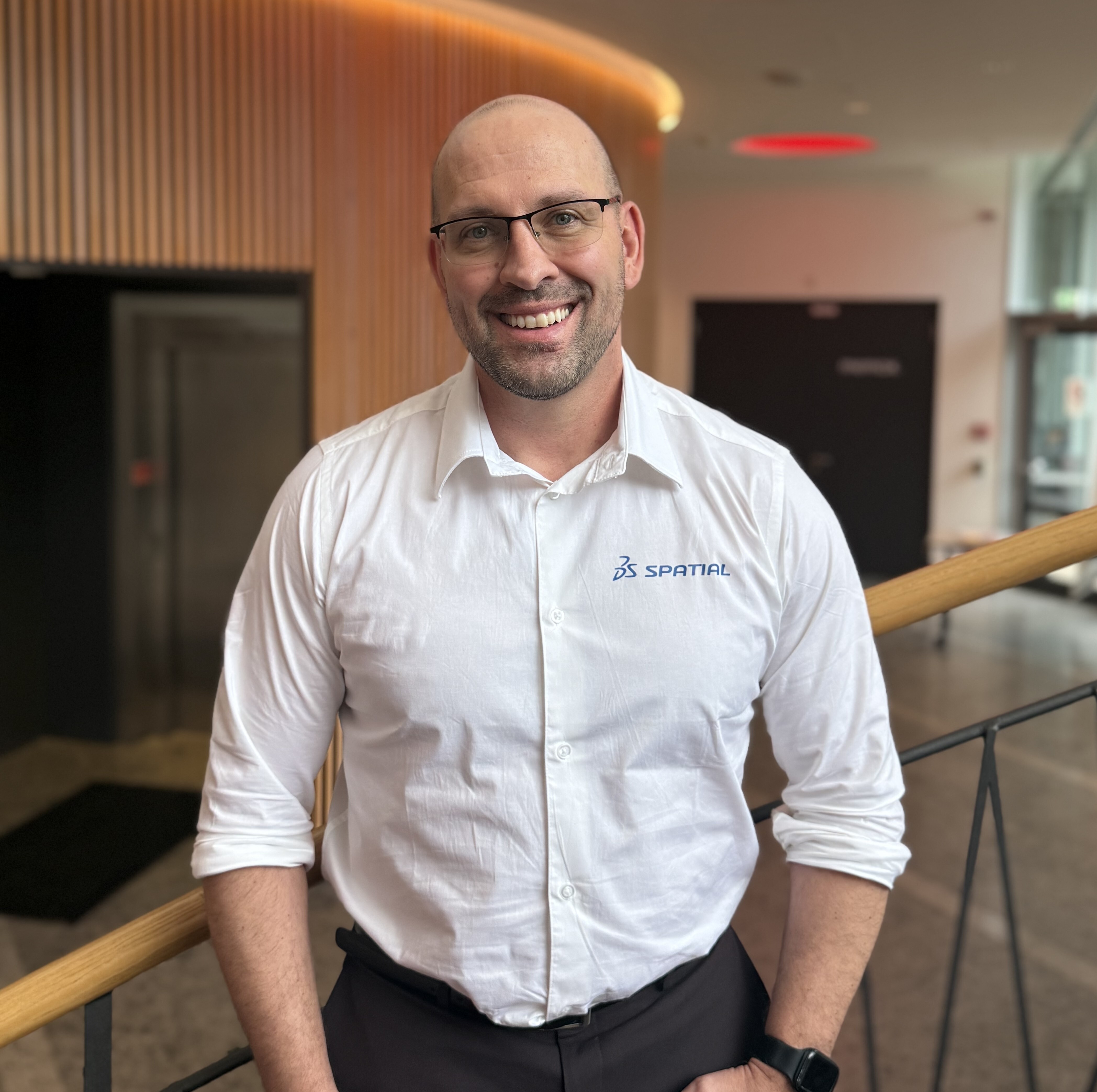
My name is Shad Reeves and I’ve been with Spatial since April 2012. I started as a developer in 3D InterOp focusing on multi-threading of ACIS healing. I moved on to performance and scalability, and then to a management position. As a director, I manage 42 software developers across Broomfield, Las Vegas, and Pune. I am responsible for the quality of the product, the delivery of enhancements and bugs fixes in a timely manner, 3D InterOp feature development and documentation, and hopefully making the customer happy in what we do!
-
What drew you to the CAD interoperability space specifically, and how did you end up at Spatial?
My background was originally in databases and business intelligence. I worked for a start-up called nQuire, which was purchased by Siebel, which was purchased by Oracle. There, I was in charge of scalability and reliability of databases and OBIEE (Oracle Business Intelligence Enterprise Edition). So, it is a far from CAD software.
But I wanted to be in a company where I could see my contributions have direct impact. [Spatial was close to Boulder, and the people I interviewed with were intelligent and capable. I was more attracted to the company than Interoperability, but the work was at least going to be challenging. I saw a way in which I could contribute within a very short ramp-up, and I thought that was intriguing. Plus, it gave me an opportunity to learn about a completely new sector of software, one that I had not even touched in my years prior.
- How has your role evolved over time and what have you personally contributed to the broader Dassault Systèmes ecosystem throughout your career?
Being a performance and scalability developer, I was able to jump in and code right away. Over the years, I was leading through technical example and code reviews. I was able to contribute to things besides just code and was able to establish development processes that are used across the team and across the sites. I grew to guiding people through their projects rather than getting deep into every enhancement or bug fix. In Dassault Systèmes, I started to contribute to the webtechno team and champion our translator for SOLIDWORKS. My role is now directly interfacing with many consumers while I guide the teams through meeting the needs of our customers.
Leading a Global Team
- You manage 42 engineers across Broomfield, Las Vegas and Pune, how do you keep the team aligned and productive across three locations?
This can be challenging at times. I do meet with product management in France twice a week, and with my team in Pune four times a week. I meet every day with my team here in Broomfield. I do think the teams are productive because they are made up of very good people. The managers are extremely good at communicating status and managing the projects and people under them. We have projects and iterations that require us to prove progress toward end goals. This means establishing objectives on an iterative basis and guiding people to deliver incrementally. I couldn’t deliver if it weren’t for how good the people that work for me are. We stay focused on our projects and try to avoid interruption during iterations. We align monthly to make sure we are adhering to our schedule and to plan new projects as old ones are completed. It does require keeping a lot of balls in the air, and I am no expert juggler. But we are succeeding and it is a huge team effort.
- What does day-to-day leadership look like for you, how do you balance management, technical oversight and strategic planning?
On a daily basis I have to coordinate between my various teams. This means keeping track of their projects and progress, as well as contributing to high level design. Occasionally I’ll dive into a coding session with someone here in Broomfield to coach them through whatever problems they are having with race conditions, C++, or dangling pointers. Strategically, I have to actively participate with Product Management to make sure that dev can deliver on PM vision. It means saying no when appropriate, and being excited about new work that we can deliver on. We have a challenge of keeping 3D InterOp the best CAD translation SDK in class to our customers, and that’s more than just handling every single corner case of every single format. It means anticipating their needs and guiding them through requirements like what is needed for DataPrep add-on. On top of this, it is a privilege to work with so many intelligent and capable developers. The balance does require me delegating to teams and relying on their expertise to complete their projects.
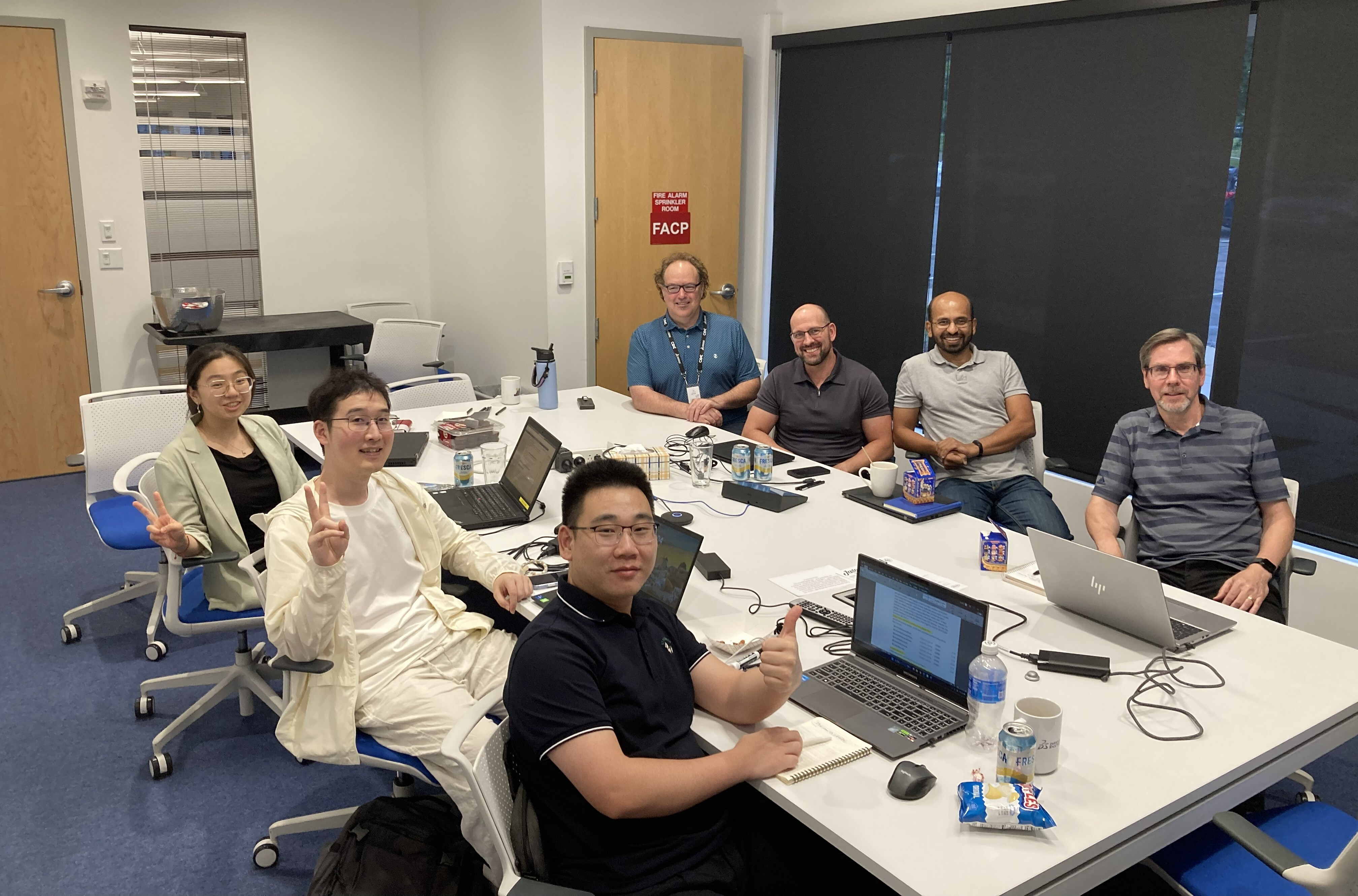
ZWSOFT team to our Colorado headquarters for a Dev2Dev session
The 3D InterOp Mission
- For someone unfamiliar with 3D InterOp, how would you describe what your team builds and why it matters to engineering software developers?
We provide a consistent interface for accessing all BREP, geometry, and meta data for CAD, BIM, and visualization formats. We provide a toolset that abstracts the complexities of translation software. It is one interface for all formats, which makes it easy for a customer to get at the data they need to do deeper analysis and downstream processing of mechanical engineering files. We do this in a performant way, and try to deliver on a constantly shifting landscape where new formats appear and old ones evolve. We also provide data simplification and optimization through a product called DataPrep. It simplifies and optimize complex models to better aid in downstream operations for our customers. It is very nuts and bolts in an industry with real nuts and bolts.
-
CAD translation is often described as deceptively complex, what do most people underestimate about the challenge?
I don’t know many who actually think translation software is easy. Every new version of a CAD system adds new features, and we are always trying to provide translations of those new features. We support four platforms (Linux x86, Linux ARM, Windows, and Mac) across over forty formats. We support visualization, PMI, manufacturing data, and have to do it with both Connect and UConnect products. The matrix alone is huge. Given that we reverse engineer some formats while using toolkits for others, we have a lot just in maintenance alone. We have to work in a very large sandbox where we cannot control every input. We have to be robust in the face of bad input data, and try to provide working geometry and BREP to downstream consumers. It isn’t easy, and the targets are always moving.
Technical Challenges & Innovation
-
What are the biggest technical challenges your team is currently solving?
We have to provide enhancements like agentic AI to help our customers with writing code. But we face challenges in growing the technology across all global stakeholders. Performance is another challenge. We have to restructure decades old code so that it can scale with modern hardware. We have to maintain and enhance code so that it meets new challenges without breaking old format support. Given how much we have to support, and how many versions we have to support, this is daunting. Regressions are a daily reality. We have to support decades old formats while supporting newer versions and newer formats. That is a technical challenge that requires strict adherence to Software Engineering practices that can scale with a growing organization.
- How do you stay current with CAD vendor releases across 30+ formats every year?
We partner with some of the format vendors to be able to install new versions of their product and see what new features are available. We work closely with the product management team who keep track of new releases and what each new format is providing. Developers have to reverse engineer many formats, so that means they have to try to develop some models in the native modelers or products. It is a challenge, one that requires staying up to date on our what the vendors can do in their respective fields. This means reading technical release documents from them, and actually using their products some of the time.
Spatial's Product Portfolio
-
How do 3D InterOp, Data Prep and the broader Spatial SDK portfolio work together to solve real engineering challenges?
You cannot improve a design if you cannot import the old one. Spatial facilitates the import of mechanical data into our customers’ end products. Most of our customers are not building machines or sheet metal from scratch. They are doing analysis on complex designs or providing tools to machine complex parts. 3D InterOp is the first part of their process. We get the data into their system at as high of a quality as possible. If we fail or provide bad data, their analysis will be wrong. So, we must provide the highest quality geometry and richest meta-data set from the native systems.
DataPrep is intended to streamline analysis and processing for our customers. With things like Hidden Body Removal or Small Body Removal, the end processes act on less data that wouldn’t need to be analyzed. They can quickly display things or provide meshes of outer shells that are essential for their processing, all while ignoring internal components that do not impact certain aspects of the assembly or part.
-
Can you share a concrete example where Spatial's interoperability technology made a significant difference for a customer?
While working with while working with metrology companies, we provided a rich set of PMI that could be used by their technology to build path planning tools for metrology. Without the rich set of PMI, they could not develop tools that measure their customers’ parts. In some cases, we helped them reduce the path planning from weeks to hours. We directly work with them to provide more and more PMI functionality that is essential to their products.
Working at Spatial
-
What makes Spatial a unique place to work for engineers specializing in 3D interoperability?
We are a global team with a wide range of experience. We have some who have worked in the software engineering industry for decades, and others just fresh out of college. Our uniqueness is in our breadth of skill sets. We have mechanical engineers, computer science performance engineers, and design engineers all working under one umbrella. It exposes you to a smattering of all areas, and you can learn a lot here.
- What advice would you give to a software engineer who wants to specialize in this field?
You must be ready to work within the unknown. We reverse engineer a lot of things and many times do not know of all of the possible things a product can do. So, you have to be comfortable with sometimes incomplete requirements and be ready to be reactive when a new part file or assembly file breaks your code. It is impossible to perfectly keep up with every native format, but you can get close. And this means anticipating flexible code design and refactoring code when you were wrong originally.
About Spatial Corp
Spatial Corp, a Dassault Systèmes subsidiary, is the leading provider of 3D software development toolkits for technical applications across a broad range of industries. Spatial 3D modeling, 3D visualization, and CAD translation software development toolkits help application developers deliver market-leading products, maintain focus on core competencies, and reduce time-to-market. For over 35 years, Spatial’s 3D software development toolkits have been adopted by many of the world’s most recognized software developers, manufacturers, research institutes, and universities. Headquartered in Broomfield, Colorado, Spatial has offices in the USA, France, Germany, Japan, China, and the United Kingdom. For more information on Spatial’s latest updates and product offerings, please visit www.spatial.com.